

Project 3 and Hash Tables with Open Addressing
Chapter 5 of Open Data Structures
Lecture Video on Open Addressing
Review
Maps/Dictionary
Map (dictionary) is a relation between a set of keys
and set of values.


Implementing Dynamic Maps/Dictionaries
We want a data structure in which finds/searches are very fast.
As close to
as possible. With the minimum number of executed instructions per method.
Insert and Deletes should be fast too.
Objects in a map have unique keys. A key may be:
A single property/attribute value, or
Created from multiple properties/values.
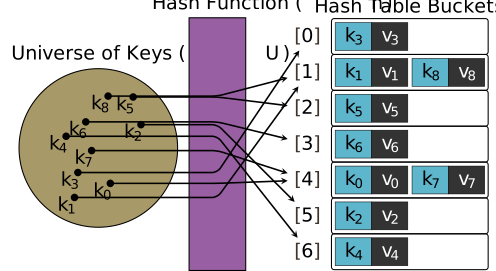
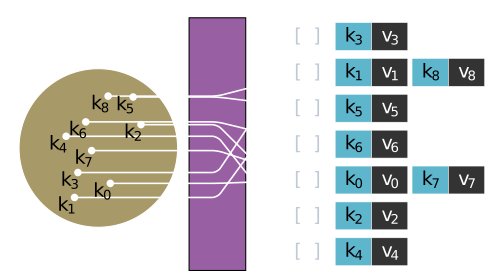
A Conceptual View of Hash Tables
Generating Hash Codes
Note that the key may not be an integer that can neatly be used for hashing.
For example,Floating-point numbers: (e.g.,
3.14159,23543.43,3.997E-8)String values: (e.g.,
"Alice","Dear diary",":-)")Objects of custom classes.
We need to make a hash-code function for each type we want to use as a key in our hash table.
Dealing with Collisions
A problem arises when we have two keys that hash in the same array entry — this is called a collision.
There are two ways to resolve collision:
Hashing with Chaining (a.k.a., “Separate Chaining”):
Every hash-table entry contains a pointer to a linked list of keys that hash in the same entry.Hashing with Open Addressing:
Every hash-table entry contains only one key. If a new key hashes to a filled table entry, systematically examine other table entries until you find one empty entry to place the new key.
Hash Tables with Open Addressing
So far, we have studied hashing with chaining, using a list to store the items that hash to the same location.
Another option is to store all the items (references to single items) directly in the table.
Open addressing
Collisions are resolved by systematically examining other table indexes,until an empty slot is located.
Linear Probing
The key is first mapped to an array cell using the hash function (e.g.,
hashCode(key) % ARRAY_SIZE).If there is a collision, find an available array cell.
Choose the next available array cell.
First try
arrayIndex = hash value + 1;Then try
arrayIndex = hash value + 2;Be sure to wrap around the end of the array!
arrayIndex = (arrayIndex + 1) % ARRAY_SIZE;Stop when you have tried all possible array indices.
If the array is full, you need to throw an exception or, better yet, resize the array.
Linear Probing: Limitations
As collisions occur, clusters of occupied positions
form and grow.A collision will use up the hash position for other keys, leading more collisions and clustering.
To reduce clustering, we can probe for keys in non-linearly using quadratic probing or double hashing.
Such design changes are easy made by updating our single hash function.
Quadratic Probing
Variation of linear probing that uses a more complex function to calculate the next cell to try.
Double Hashing
Apply a second hash function after the first.
The second hash function depends on the key, like the first, but is used as an offset for the next place to check.
A secondary hash function must:
Differ from the first and
Not generate an offset of zero (obviously).
Prime numbers are often used in the hashing functions to make them different.
A good simple algorithm:
unsigned int hash1(const Type &key){
  return hashCode(key) % TABLE_SIZE;
}unsigned int hash2(const Type &key){ // prime is < TABLE_SIZE
return PRIME_CONST - (hashCode(key) % PRIME_CONST); // never 0
}bool insert(const Type &key) {
if(isFull) return false;
unsigned int probeIndex = hash1(value);
const unsigned int OFFSET = hash2(value);
while (array[probeIndex] != nullptr)
probeIndex = (probeIndex + OFFSET) % TABLE_SIZE;
// To Do: Add value at probeIndex
return true;
}Load Factor
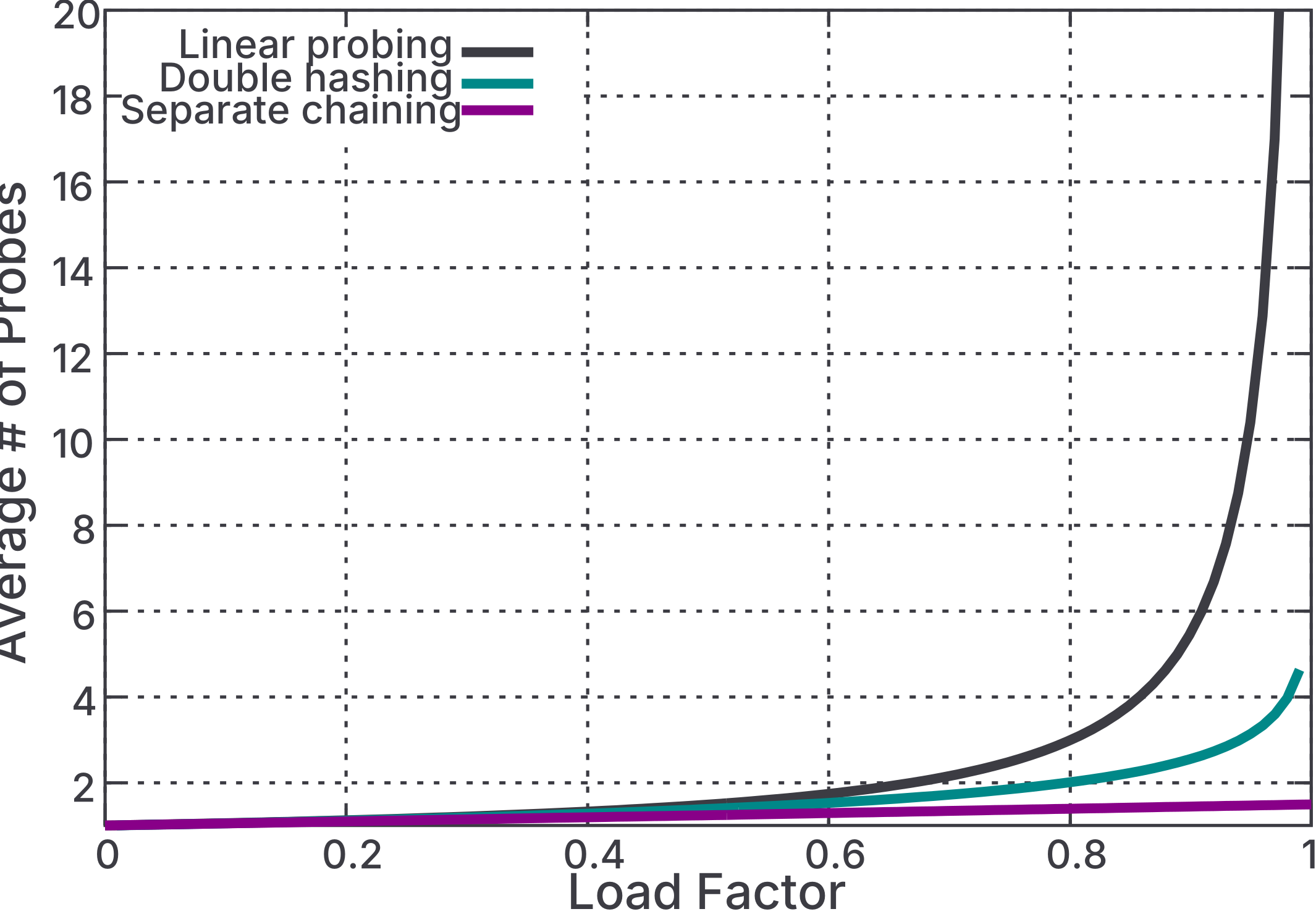
The load factor is the proportion of the
hashed item count to the table size.The expected load factor will is needed to determine the hash table and hash functions’ efficiency.
For Open Addressing:
If < 0.5, wasting space
If > 0.8, overflows are significant.
For Chaining:
If < 1.0, there is wasted space.
If > 2.0, then search time to find a specific item may factor in significantly to the [relative] performance.
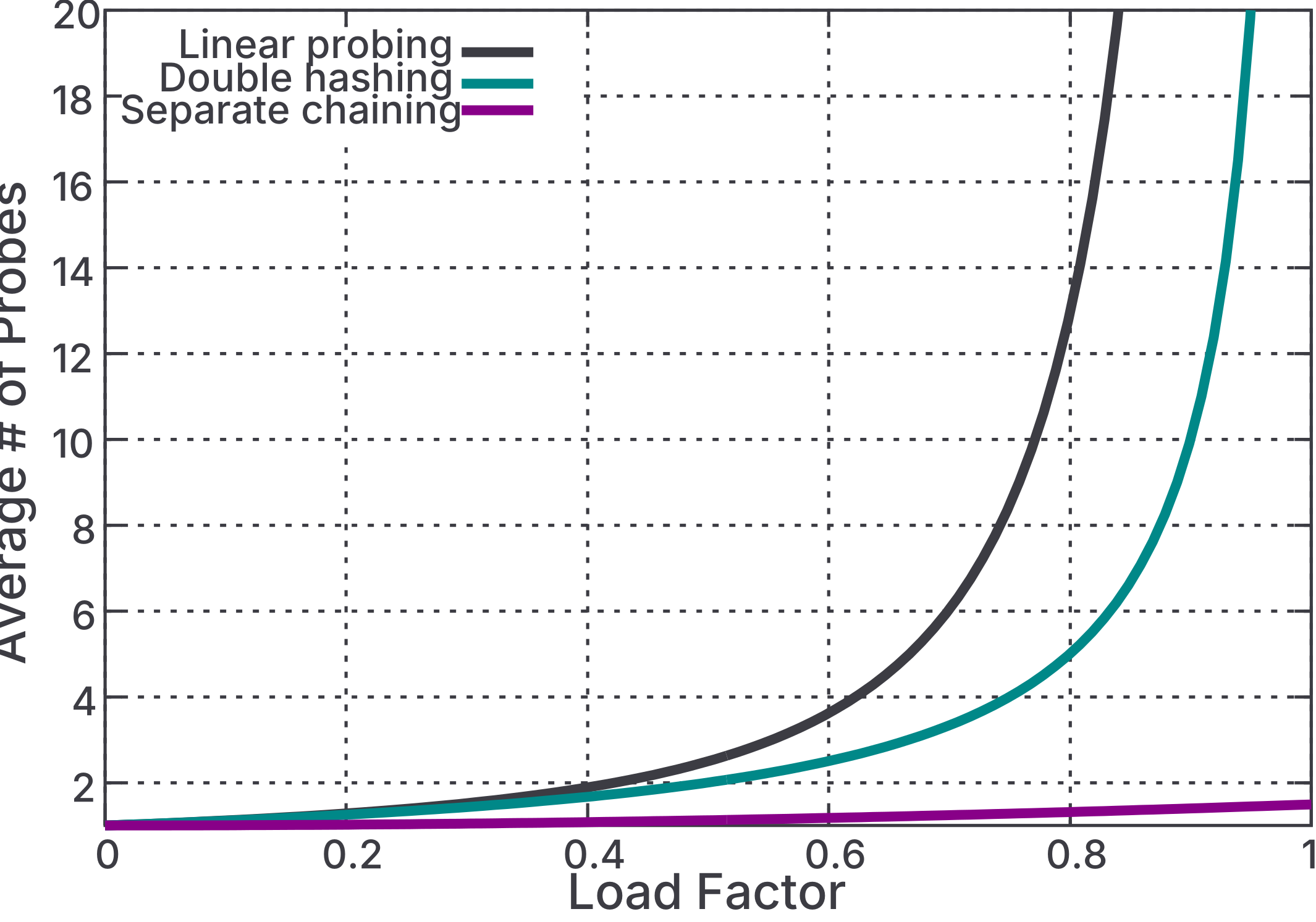
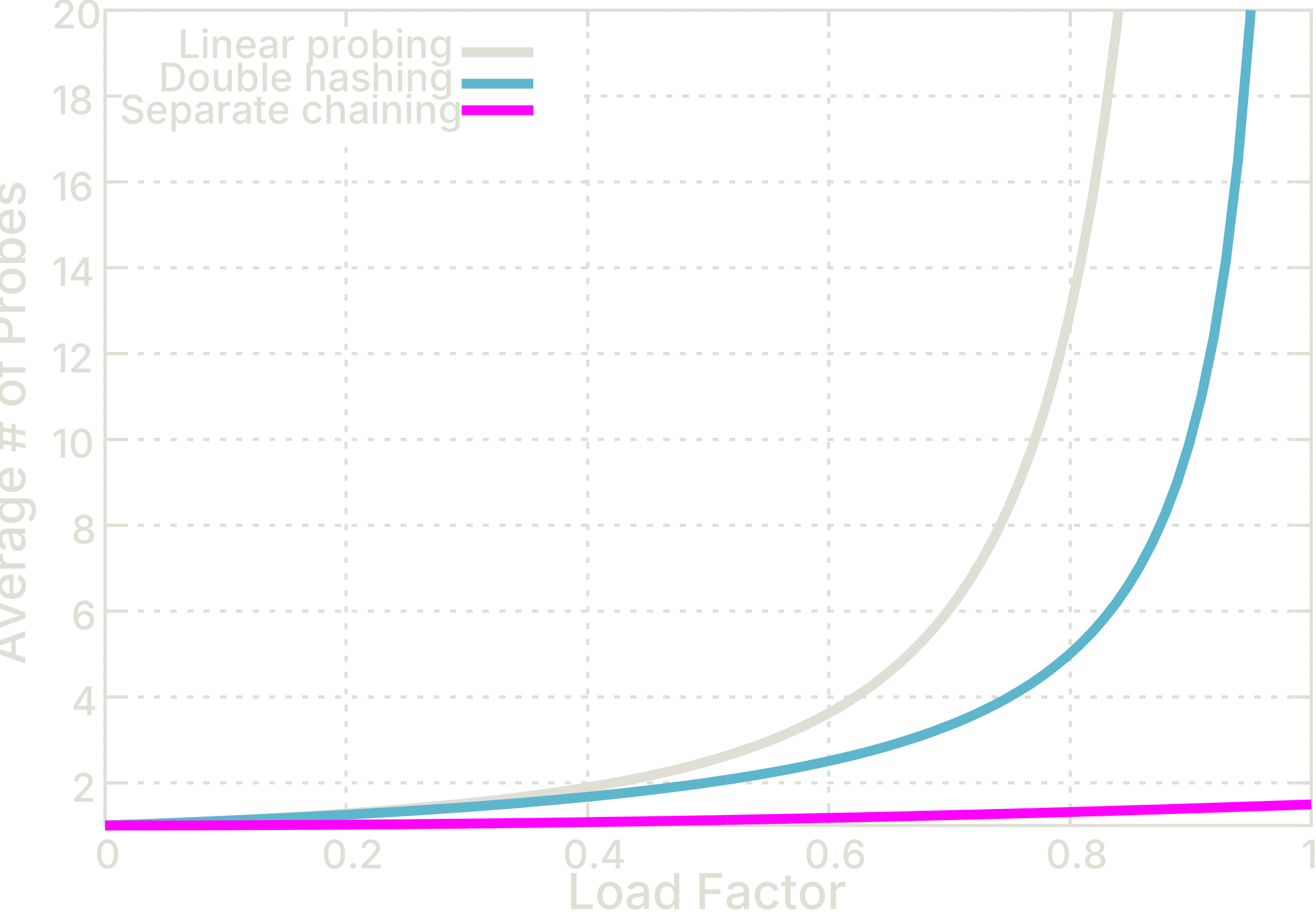
CPU Cache Misses Required for Look-Up
In large hash tables that far exceed the CPU cache size, linear probing performs better due to better locality of reference. However, linear probing performs poorly as the table gets full.


Deletion in Open Addressing
Open Addressing vs.Separate Chaining
When should you be concerned about Open Addressing and Separate Chaining implementations?
When implementing a hash table, consider:
Do you know the number of items to be inserted into the table?
Do you have plenty of memory?
Do you know the expected load factor?
Hash Tables in the STL
| No duplicates | Duplicates | |
|---|---|---|
| Key-Only | std::unordered_set | std::unordered_multiset |
| Key-Value Pair | std::unordered_map | std::unordered_multimap |
std::hash is defines the default hash functions as function objects.
* You may not use these containers for labs 18 and 19.
Lab 19: Hash Tables with Open Addressing
Let’s take a look at the lab based on today’s lecture.
Also, start working on Project 3.